
Trauma Therapy in Pakistan: Healing from PTSD, Disasters, and Life Challenges
Trauma therapy in Pakistan is gaining recognition as an essential service for those struggling with the lasting effects of distressing events. In a country frequently impacted by natural disasters, security challenges, and personal hardships, trauma therapy offers a path to recovery and resilience.
Whether you have experienced floods, loss, violence, or accidents, professional therapy can help you process pain and rebuild your life. At TherapyWorks.com.pk, we provide compassionate, evidence-based support tailored to Pakistani cultural values.
Understanding Trauma in the Pakistani Context
Trauma occurs when a person faces events that overwhelm their ability to cope. In Pakistan, common sources include devastating floods, terrorism, domestic violence, road accidents, and sudden loss of loved ones.
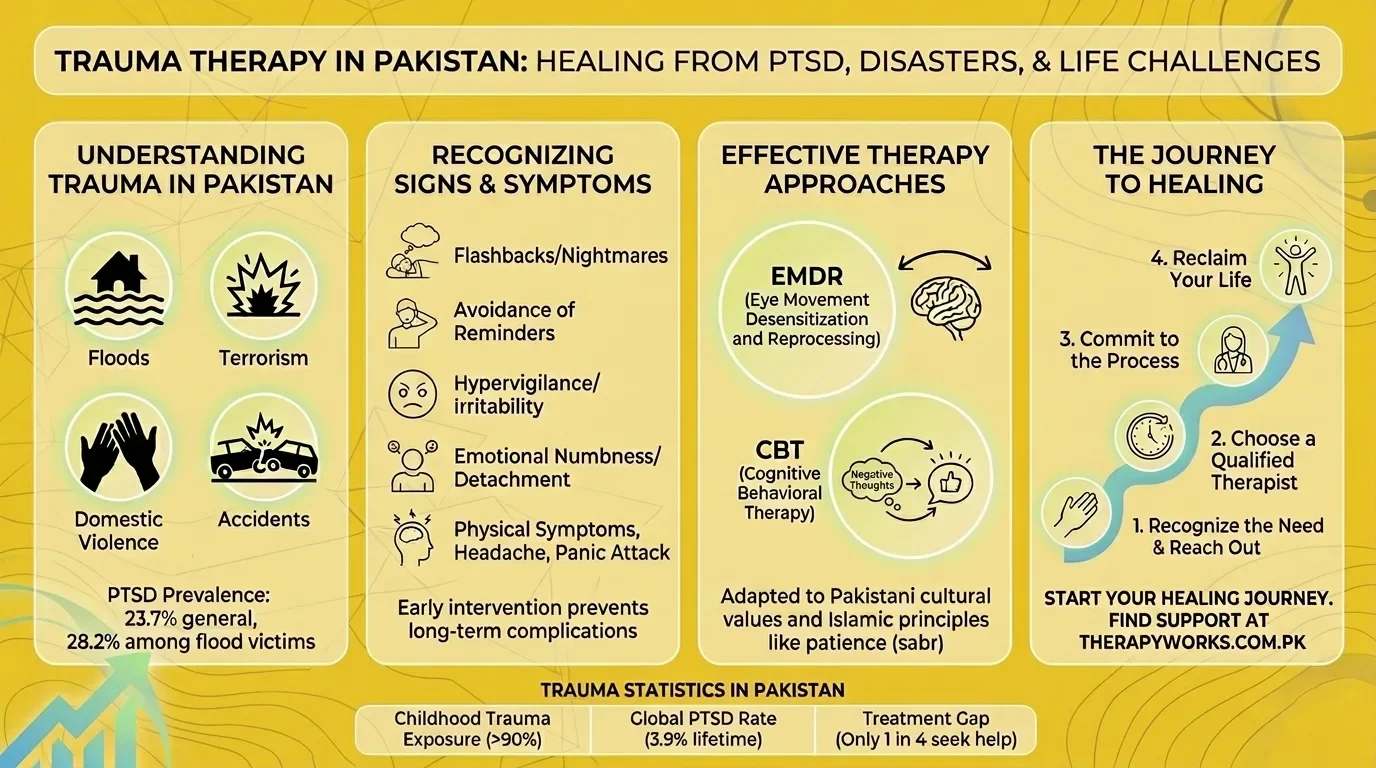
Recent studies highlight the scale of the issue. For instance, after major floods, PTSD symptoms affected 23.7% of individuals, rising to 28.2% among flood victims. In some affected communities, rates are significantly higher. Childhood trauma exposure is also widespread, with over 90% of children in certain studies reporting at least one traumatic event.
Key causes in Pakistan include:
- Natural disasters — The 2010 and 2022 floods displaced millions and left deep psychological scars.
- Violence and conflict — Exposure to terrorism or sectarian issues, particularly in regions like Khyber Pakhtunkhwa.
- Domestic and gender-based violence — Often intensified after disasters due to stress and displacement.
- Personal losses — Accidents, illness, or bereavement.
These experiences can lead to Post-Traumatic Stress Disorder (PTSD), anxiety, depression, and other challenges. Trauma therapy in Pakistan addresses these by helping individuals process memories safely.
Recognising the Signs You May Need Trauma Therapy
Many people in Pakistan hesitate to seek help due to stigma or lack of awareness. However, recognizing symptoms early is crucial.
Common signs include:
- Flashbacks or nightmares about the event.
- Avoidance of reminders (places, people, or conversations).
- Hypervigilance, irritability, or sleep disturbances.
- Emotional numbness or feelings of detachment.
- Physical symptoms like headaches, fatigue, or panic attacks.
If these persist for more than a month and affect daily life, trauma therapy can make a significant difference. Early intervention prevents long-term complications.
Benefits of Trauma Therapy
Trauma therapy offers numerous benefits. It reduces the intensity of painful memories, improves emotional regulation, and restores a sense of control. Many clients report better relationships, improved work performance, and renewed hope.
In the Pakistani context, trauma therapy respects family values, religious beliefs, and cultural practices. Therapists often integrate these elements for more effective healing.
Effective Approaches
Several proven methods are used in trauma therapy in Pakistan:
1. Eye Movement Desensitisation and Reprocessing (EMDR) EMDR helps reprocess traumatic memories using guided eye movements or bilateral stimulation. Research shows EMDR can be faster and highly effective for PTSD compared to other methods. It is particularly useful for single-event traumas like accidents or disasters.
2. Cognitive Behavioural Therapy (CBT) Trauma-focused CBT helps change negative thought patterns and behaviours. It teaches coping skills and is effective for complex or ongoing trauma. Studies in Pakistan and globally support its use.
3. Other Approaches
- Mindfulness-based techniques.
- Narrative therapy helps reframe personal stories.
- Group therapy for shared experiences, such as flood survivors.
- Culturally adapted counselling that incorporates Islamic principles of patience (sabr) and community support.
At TherapyWorks, our experts select the best combination based on individual needs.
The Current State in Pakistan
Mental health services have grown in recent years, with clinics in major cities like Lahore, Karachi, Islamabad, and Rawalpindi. Online options make it more accessible, especially for those in remote or conservative areas.
Challenges remain, including stigma, limited trained professionals in smaller cities, and affordability. However, organisations and private centres like TherapyWorks are bridging these gaps by offering confidential, affordable sessions.
Success stories abound. Many Pakistanis have overcome flood-related PTSD, childhood trauma, or domestic violence through consistent therapy.
How to Start Trauma Therapy in Pakistan
Taking the first step is brave. Here’s how:
- Recognise the need and reach out.
- Choose a qualified therapist experienced in trauma.
- Opt for in-person or online sessions based on comfort.
- Commit to the process — healing takes time, but it is worth it.
At Therapy Works, we offer personalised trauma therapy plans. Our team understands local challenges and provides a safe, non-judgmental space.
Statistics on Trauma and Mental Health in Pakistan
| Statistic | Details | Source/Reference |
|---|---|---|
| PTSD Prevalence | 23.7% general, 28.2% among flood victims | Recent 2024 studies |
| Childhood Trauma Exposure | Over 90% of children experience at least one event | Community studies |
| Global PTSD Rate | 3.9% lifetime; much higher in conflict/disaster areas | WHO |
| Treatment Gap | Only 1 in 4 with PTSD seek help in LMICs | WHO |
| Common Comorbidities | Anxiety (31%), Depression | Pakistani research |
These numbers underscore why accessible trauma therapy in Pakistan is vital.
Conclusion: Your Journey to Healing Starts Today
Trauma does not define you. With the right support through trauma therapy in Pakistan, you can reclaim your life, strengthen relationships, and build resilience for the future. At Therapy Works, we are committed to walking this path with you.